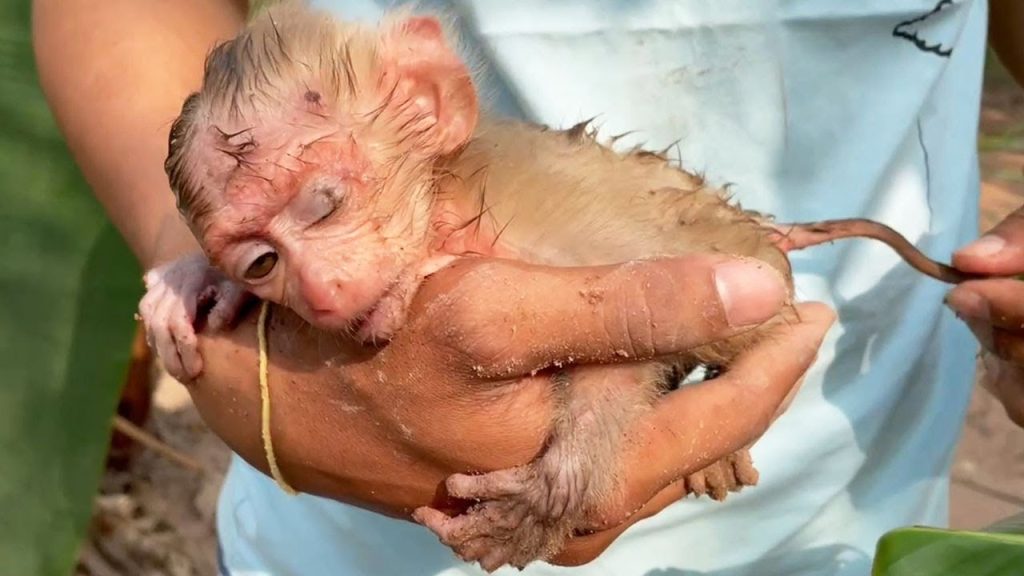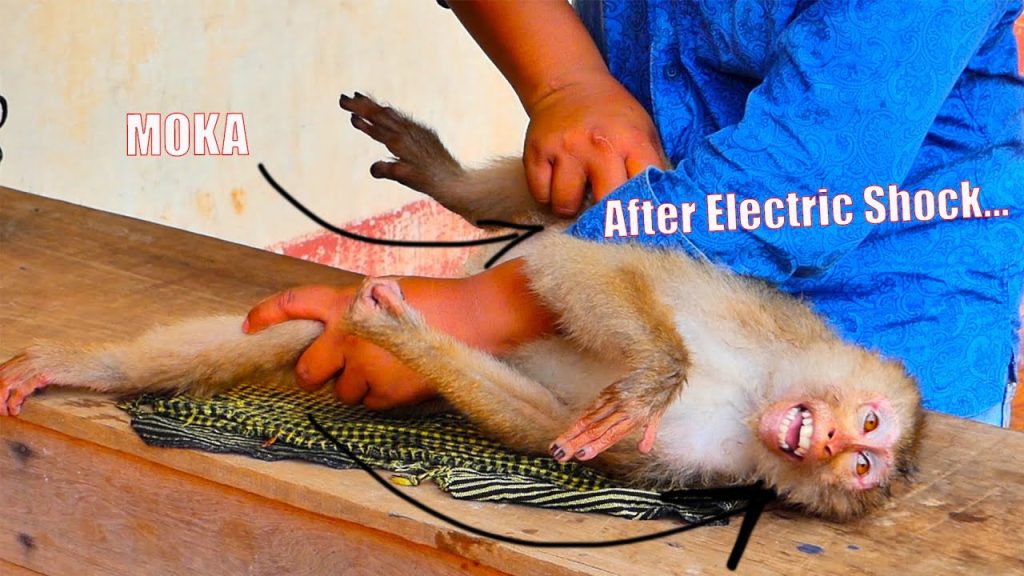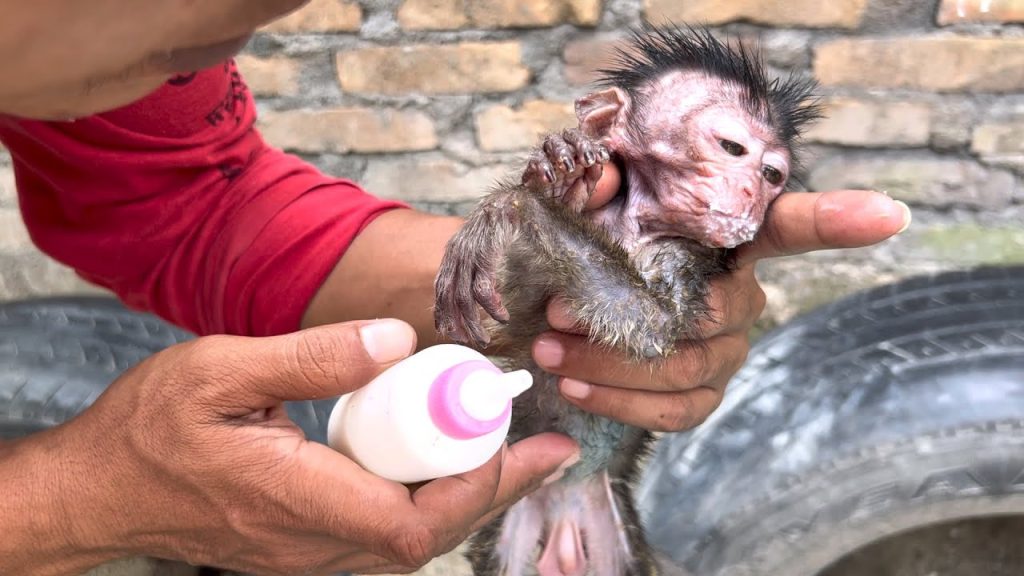
Seeing a small monkey being forced to drink milk can be deeply upsetting, especially when the baby struggles, cries, or turns its head away. To understand this moment, it is important to look beyond the surface and recognize what is happening emotionally and physically for such a young animal. Baby monkeys are fragile, highly sensitive, and guided almost entirely by instinct. When feeding becomes stressful, their reaction is not stubbornness, but fear and confusion.
In many cases, a baby monkey refuses milk not because it does not need it, but because it feels overwhelmed. Hunger, tiredness, discomfort, or unfamiliar handling can make feeding feel threatening. When a caregiver holds the baby too firmly or rushes the process, the monkey may panic. Its body stiffens, its mouth closes tightly, and it may cry or flail in distress. From the outside, it can look like the baby is being “forced,” but often the intention is to prevent dehydration or weakness, especially if the monkey is sick or very young.
However, force-feeding carries real risks. When a baby monkey is stressed, it can choke, inhale milk into its lungs, or develop feeding aversion. Milk that is meant to nourish can instead become a source of fear. That is why patience is essential. Feeding should be slow, calm, and responsive to the baby’s signals. A gentle position, warm milk, and a quiet environment can make a significant difference. Sometimes, simply waiting a few minutes and trying again allows the baby to relax enough to accept the bottle willingly.
Another important factor is trust. Baby monkeys associate feeding with comfort, just as they would with their mother in the wild. If feeding repeatedly becomes a struggle, that sense of safety can be damaged. Caregivers who speak softly, maintain eye contact, and allow the baby to control the pace help rebuild that trust. Even small adjustments—changing the nipple flow, altering the baby’s position, or feeding in shorter sessions—can turn a stressful experience into a calming one.
Ultimately, feeding a small monkey is not just about nutrition. It is about emotional security. A baby who feels safe will almost always eat better. While there are moments when medical necessity requires firm assistance, these situations should be handled with extreme care and professional guidance. The goal is never to overpower the baby, but to support it through fear and vulnerability.
When feeding is done with patience and empathy, the cries fade, the body relaxes, and the baby begins to drink on its own. In that moment, milk becomes what it is meant to be—not a battle, but comfort, healing, and life itself.