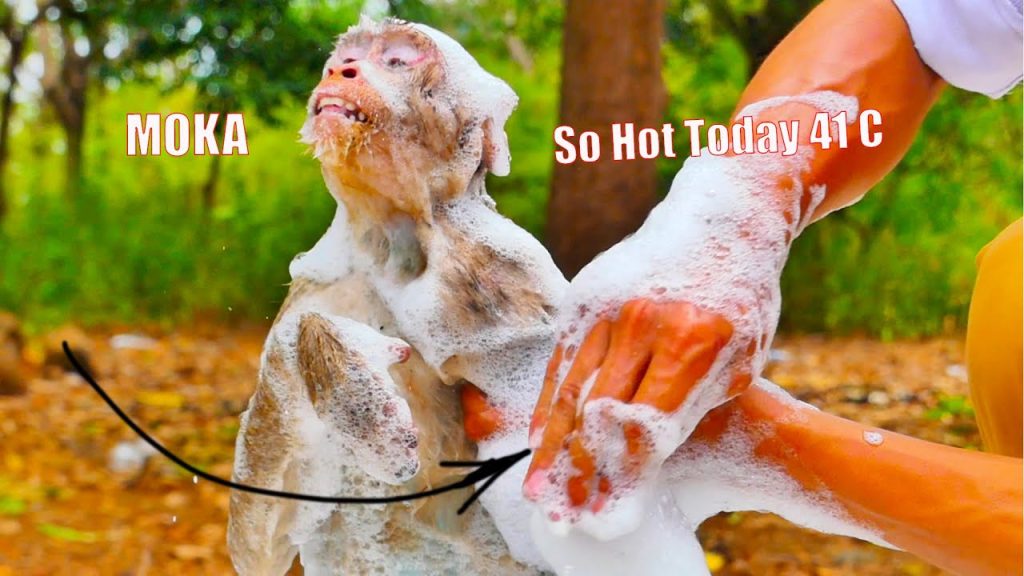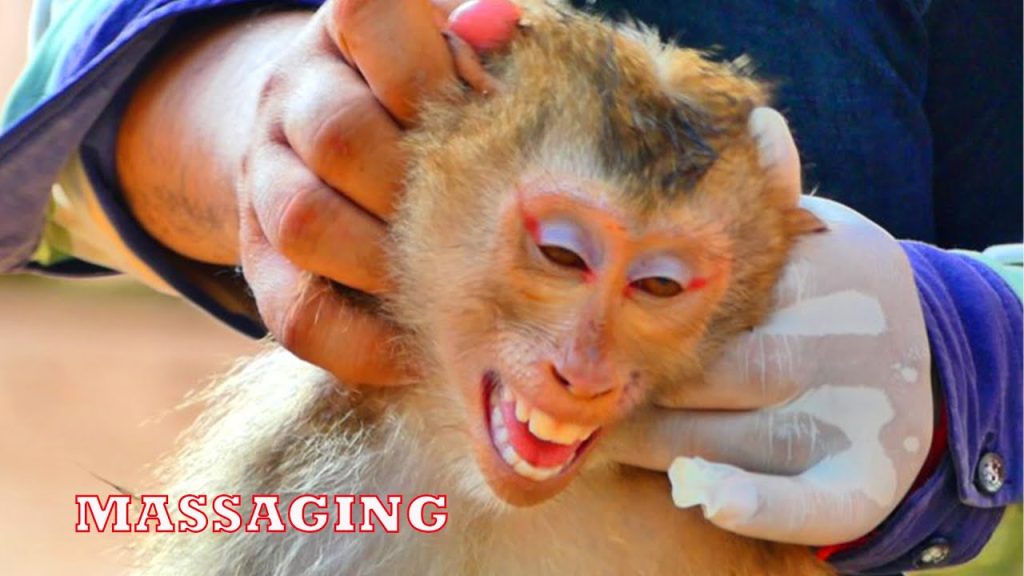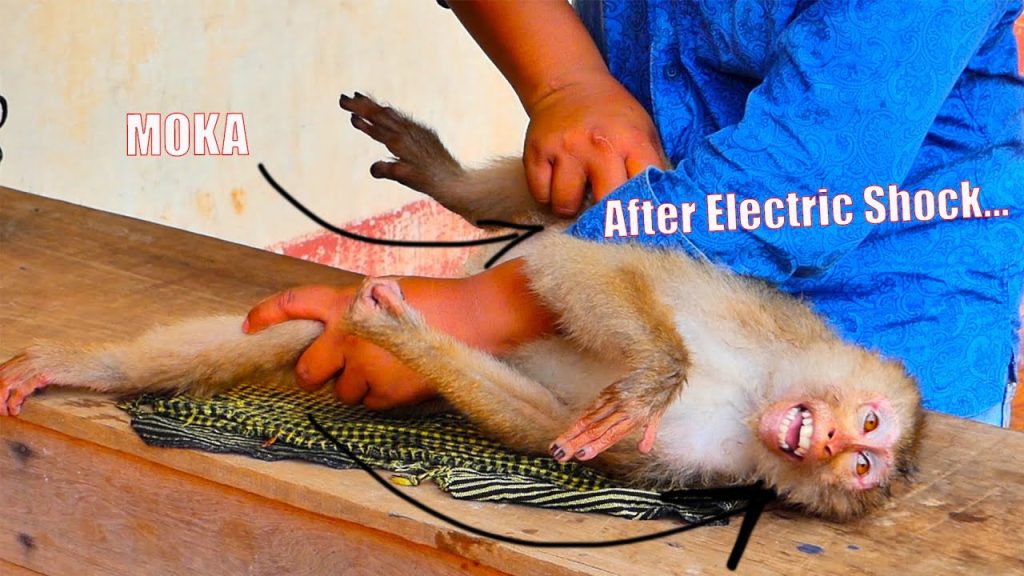
At first glance, it looks painful, even frightening, to see a little monkey like Moka struggling to move after an electric shock. Her body appears stiff, her steps unsure, and her eyes confused by what just happened. Yet in this difficult moment, one man’s calm and determined help becomes the turning point between lasting damage and hopeful recovery. What looks like hurt is actually the beginning of healing.
Electric shock is extremely dangerous for small animals. Their tiny bodies are sensitive, and even a brief exposure can disrupt nerves, weaken muscles, and cause loss of coordination. After such trauma, a baby monkey may be unable to stand or walk properly. Fear adds another layer of difficulty, making the body tense and unresponsive. Moka’s condition reflected all of this. She was alive, but her movements showed how much her body had suffered.
The man who stepped in understood that immediate, gentle action was necessary. Instead of panic or rough handling, he focused on careful support. By helping Moka move her legs slowly and naturally, he encouraged her muscles and nerves to reconnect. This kind of assisted movement is important after electrical injury. It reminds the body how to function without forcing it beyond its limits.
Although the process may look uncomfortable, it is done with intention and care. Recovery is rarely painless, especially when nerves are involved. But pain does not always mean harm. Sometimes it is the body waking up again, relearning how to respond. The man paid close attention to Moka’s reactions, adjusting his support whenever she showed distress. This awareness helped prevent further injury while still encouraging progress.
What makes this moment powerful is trust. Despite her fear and weakness, Moka allowed the man to help her. That trust did not come from words, but from calm energy, steady hands, and patience. Animals sense intention, and Moka sensed that she was not in danger. With each small movement, her confidence slowly returned.
Helping a monkey walk again after electric shock is not a one-time effort. It requires ongoing care, nutrition, rest, and monitoring. But this first step is crucial. Standing, even briefly, signals hope. Taking a few assisted steps means the nervous system is responding. It means recovery is possible.
This story reminds us that rescue does not always look gentle or easy. Sometimes it looks hard, uncomfortable, and slow. But when guided by knowledge and compassion, even painful moments can lead to healing. Thanks to this man’s help, Moka was given a chance to walk again, turning injury into hope and fear into the possibility of a healthy future