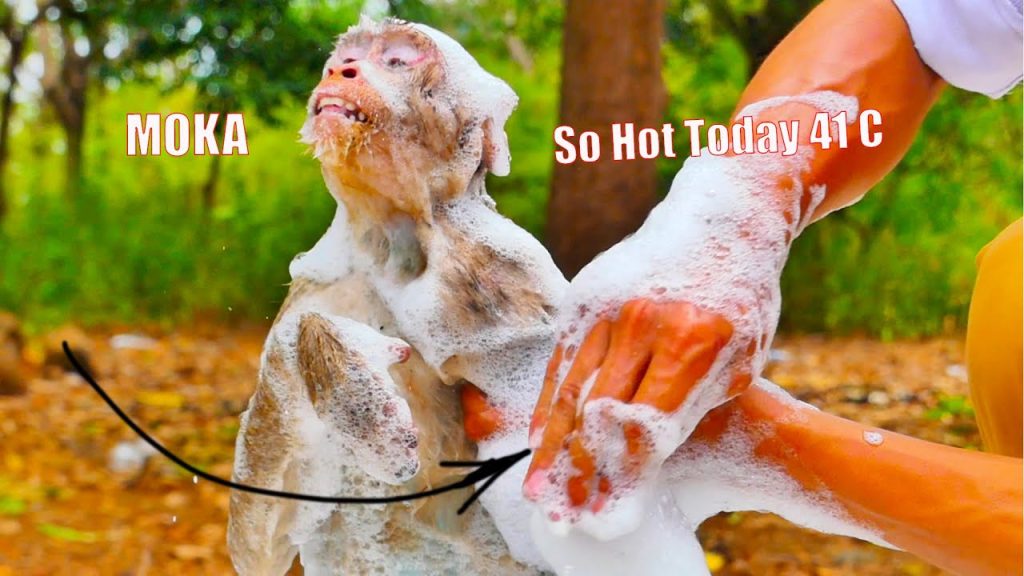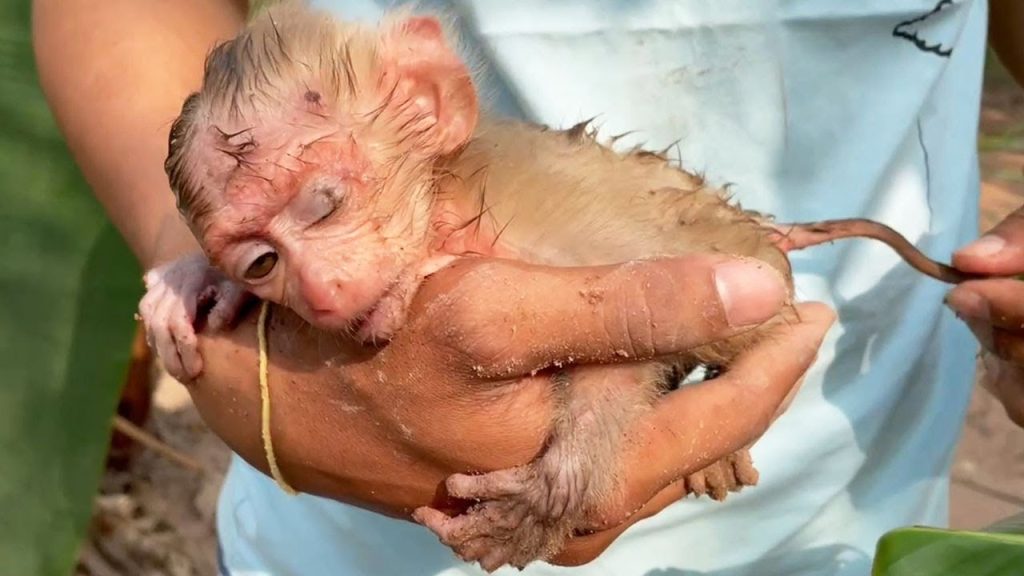
When I visited the farm that day, I did not expect anything unusual. It was meant to be a simple visit, just a walk through familiar land, observing daily farm life. But everything changed the moment I saw her. There, among the dust, heat, and noise of the farm, was Moka. Small, vulnerable, and clearly out of place, she stood out in a way that immediately pulled at my heart.
Moka looked tired and unsure, her body language showing confusion more than curiosity. Farms can be harsh environments for a young monkey. There are dangers everywhere: animals much larger than her, sharp tools, heat, insects, and the constant stress of noise and movement. As I watched her, it became clear that she did not belong there, at least not in a way that allowed her to be safe and properly cared for. The longer I stood there, the stronger the feeling grew that I could not simply walk away.
I spoke with the farm owner, explaining my concern. I asked questions first, trying to understand how Moka ended up there and what kind of care she was receiving. The owner listened patiently, and when I expressed my wish to take her home, it was not a demand but a request rooted in concern. I explained that I could provide a safer environment, better attention, and proper care suited to a young monkey’s needs.
That conversation mattered. Rescue does not always come from dramatic moments. Sometimes it comes from calm words, mutual understanding, and respect. The farm owner saw that my intention was not selfish, but protective. After some discussion, he agreed. In that moment, Moka’s future quietly shifted.
Taking her home was more than a physical act. It was a responsibility. Bringing an animal out of one environment and into another means committing to her well-being every single day. It means understanding her needs, her fears, and her healing process. I knew it would not be easy, but I also knew leaving her there would have been far harder to live with.
As Moka left the farm, she did not know her life was changing. But that is often how rescue works. The rescued rarely understand the turning point in the moment. They only feel it later, in warmth, safety, and consistent care.
This experience reminded me that compassion often begins with noticing. Seeing suffering, feeling concern, and choosing to act, even in small ways, can change a life. That visit to the farm became more than a memory. It became the beginning of Moka’s journey toward safety, care, and a future shaped by kindness rather than chance.