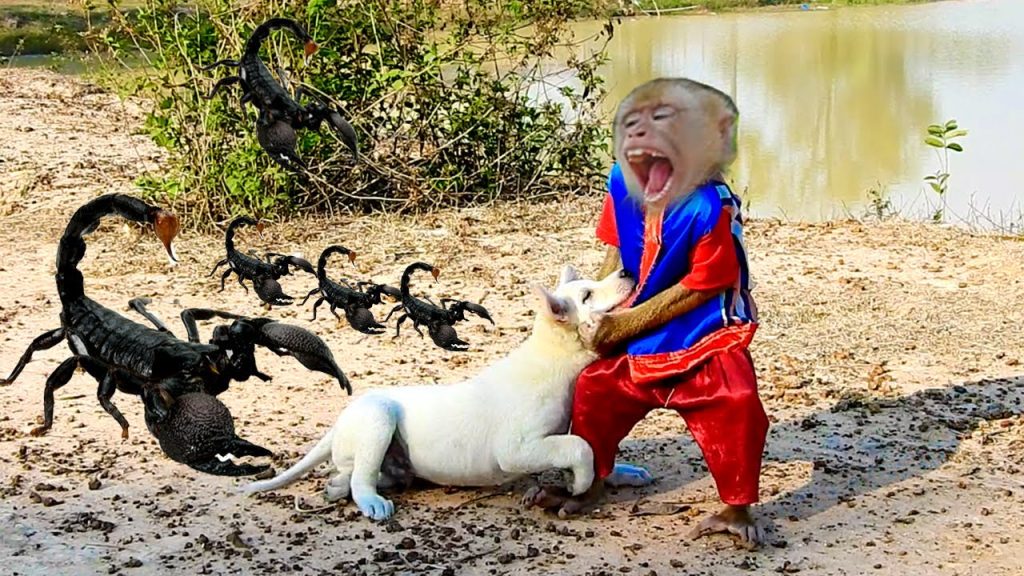
When SokYaa suddenly pulled and dragged OG hard, the action looked alarming and even cruel at first glance. To human eyes, it seemed rough, unnecessary, and frightening. But the real reason behind this behavior becomes clear the moment the threat is understood: a scorpion was about to arrive. In the animal world, especially among monkeys, danger triggers instant reactions driven purely by survival instinct. There is no time to explain, comfort, or persuade—only time to act.
Scorpions are extremely dangerous to monkeys, particularly smaller or distracted ones. A single sting can cause intense pain, swelling, paralysis, or even death. Monkeys instinctively fear creatures that move low to the ground with sudden, sharp motions. SokYaa likely noticed subtle signs before OG did—the movement in the leaves, the shape, or the unfamiliar vibration nearby. While OG may have hesitated or frozen in confusion, SokYaa reacted immediately, choosing the fastest way to remove both of them from danger.
Dragging OG was not an act of anger or dominance; it was urgency. In moments of extreme threat, animals do not consider comfort. They prioritize distance from danger above all else. If OG did not move fast enough, SokYaa’s only option was to pull him away forcefully. In the wild, hesitation can cost lives. Seconds matter, and instincts take control.
What makes this moment difficult to watch is how different animal survival behavior is from human logic. Humans tend to associate pulling and dragging with aggression or cruelty. But in nature, physical force is often used to protect, not harm. SokYaa’s rough movement was likely fueled by fear—not only for himself, but for OG as well. Removing OG from the scorpion’s path reduced the risk of a sting and increased their chances of staying safe.
Once the danger passes, animals usually calm down quickly. The panic disappears as fast as it arrived. SokYaa’s behavior would likely soften once he sensed they were far enough away. This sudden shift—from rough urgency to calm—shows that the action was situational, not habitual. It was a response to immediate danger, not a reflection of character.
Moments like this remind us that the animal world operates under different rules. Survival comes first, comfort second. SokYaa’s decision, though harsh to witness, was likely the right one in that moment. By acting quickly and decisively, he turned a potentially deadly encounter into a narrow escape. In the face of real danger, instinct sometimes looks rough—but it exists for a reason.