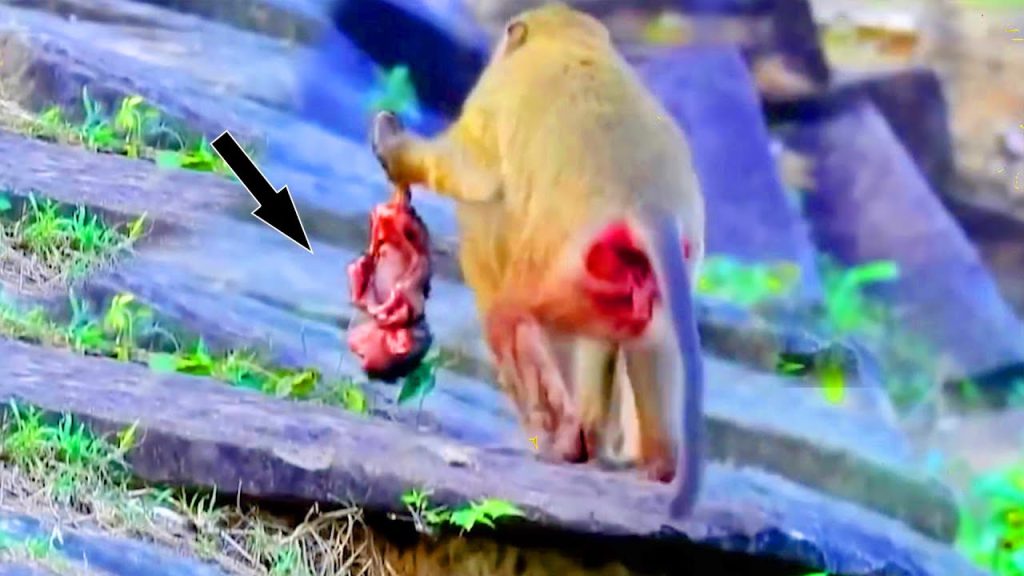
At first glance, seeing a mama monkey carrying her tiny newborn in an awkward or seemingly uncomfortable position can be worrying. It may look unsafe, unsupported, or even painful. However, in most cases, this behavior is completely natural and rooted deeply in instinct, biology, and survival strategies that have evolved over thousands of years.
Newborn monkeys are born extremely small, weak, and dependent. Their muscles are not developed enough to hold themselves up, so nature designs them to cling. A mother often carries her baby in positions that allow the infant to grip her fur firmly using instinctive grasping reflexes in the hands, feet, and tail. What may look uncomfortable to humans is often the position where the baby actually feels the most secure, because it allows maximum body contact and stability while the mother moves.
Another important reason is protection. By carrying the newborn tightly against her body—sometimes under the arm, across the chest, or pressed against the belly—the mother shields the baby from predators, cold, and sudden movements. In the wild, comfort is secondary to survival. A position that looks awkward may actually reduce the baby’s exposure and prevent accidental falls while the mother climbs, jumps, or runs.
Sometimes, the way a mother carries her newborn also reflects inexperience. First-time monkey mothers may not yet know the most balanced or gentle positions. They learn through trial, instinct, and feedback from the baby. If the infant cries excessively, struggles, or slips, the mother usually adjusts her hold. Over time, her carrying technique becomes more confident and stable.
It’s also important to understand that monkey anatomy is very different from human anatomy. Their limbs, spine, and grip are adapted for clinging and movement in trees. What looks like strain to us may not cause the same discomfort to a monkey infant. In fact, many newborns relax and sleep in these positions, showing that they feel secure rather than distressed.
However, there are situations when concern is valid. If the baby appears limp, constantly slipping, crying in pain, or unable to cling, it could indicate weakness, illness, or injury. In such cases, observation is crucial. A healthy newborn will usually grip tightly, adjust its head, and remain close to the mother’s body.
In most cases, though, this “uncomfortable-looking” carry is simply nature at work. The mother is doing what instinct tells her is safest, not what looks best to human eyes. Understanding this helps us appreciate how differently—but effectively—animals care for their young.