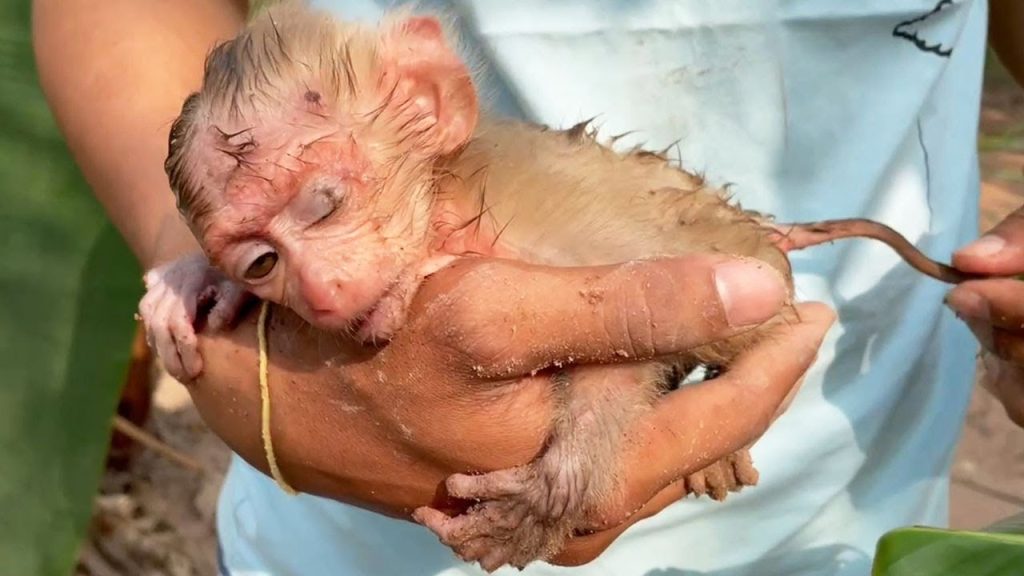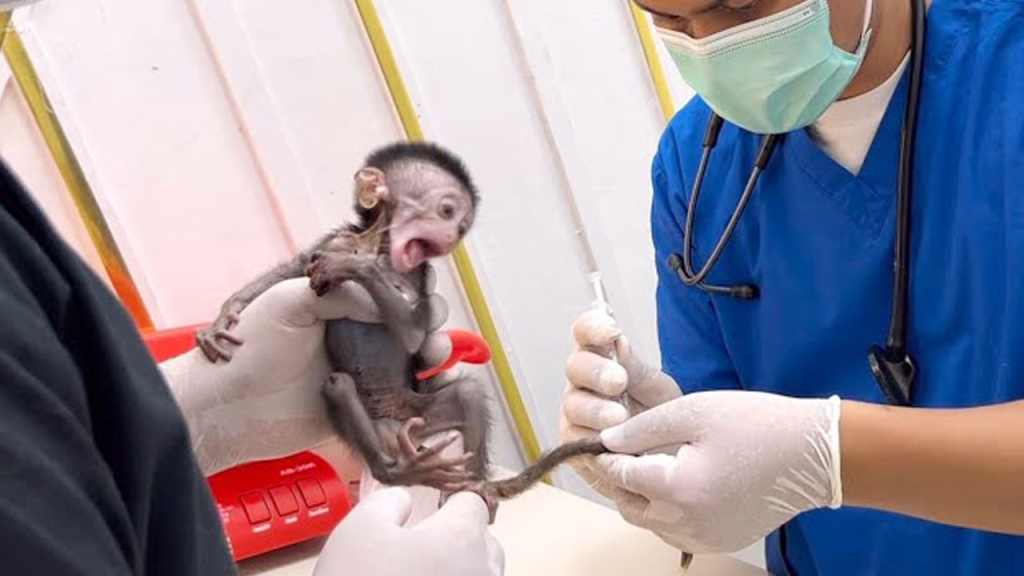
The sight of twin newborn baby monkeys crying together in a sudden tantrum is both heartbreaking and deeply understandable. Newborns rely entirely on their mothers for warmth, security, and especially milk, so when hunger hits them at the same time, their tiny world feels like it is falling apart. In moments like this, their cries overlap—high, sharp, and urgent—almost as if they are competing to see who can call their mother’s attention the fastest. Their little arms flail, their lips quiver, and their fragile bodies shake with desperation. Hunger for newborns is not a mild discomfort; it is a full-body panic that pushes them into instinctual tantrums.
For the mother, caring for twins is a tremendous responsibility. She must divide her energy, attention, and milk between two babies who both need her constantly. While one might latch onto the nipple, the other may cry louder, unable to understand why it must wait even a moment. This imbalance causes frustration, and the crying becomes stronger, more demanding. The mother recognizes these signals immediately—newborn cries are a universal language of urgency—and she instinctively moves to soothe them. Her actions are not rushed but efficient, showing a blend of tenderness and survival instinct.
The tantrums of newborn monkeys often have very simple causes: hunger, cold, or the need for reassurance. But in the case of twins, that need doubles. Their mother’s warmth becomes the safest place in their world, and they cling to her fur as soon as she draws them close. The moment milk touches their lips, everything changes. Their shaking settles, their breathing softens, and their cries melt into little grunts of satisfaction. Feeding is more than nutrition—it is comfort, bonding, and the moment when their tiny bodies finally feel secure again.
Watching them slowly drift into calmness after such intense crying shows the resilience of newborn monkeys. It also highlights the remarkable patience and strength of a mother caring for two infants at once. Even when they cry relentlessly, she responds with instinctive love, positioning them so each baby gets a chance to feed. For the twins, their tantrum is not misbehavior; it is their only way to communicate their urgent need.
In the end, once both babies are fed, they curl into their mother’s warmth, tiny hands gripping her fur. The earlier chaos disappears completely, replaced by soft breathing and peaceful rest. Their mother’s care transforms panic into comfort, showing how essential her presence is in their delicate early life.