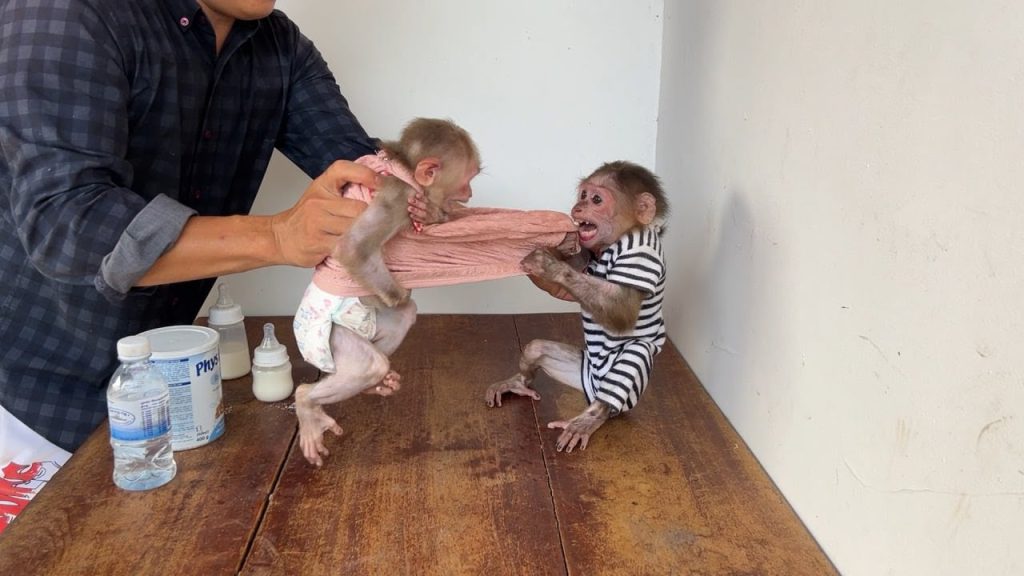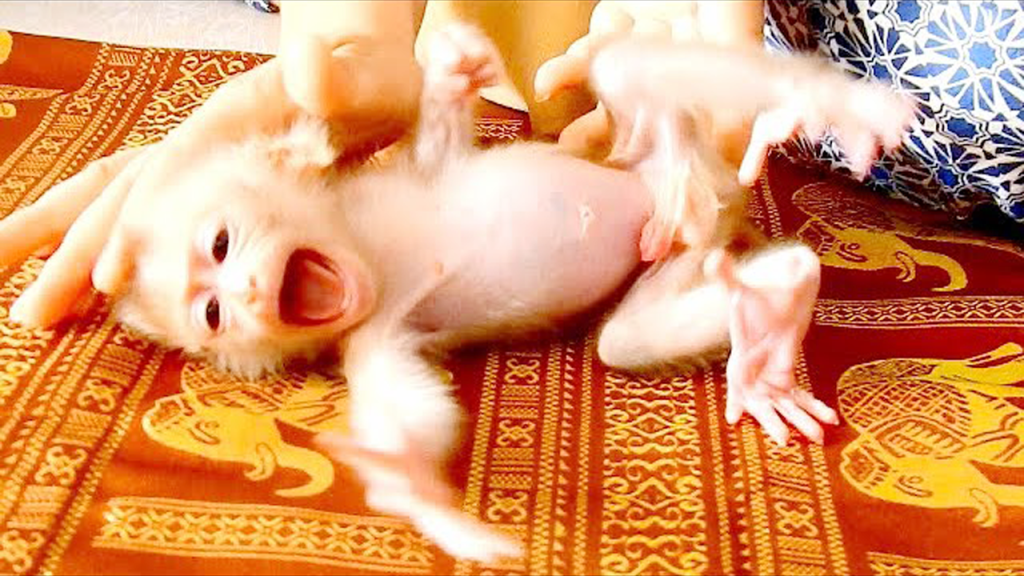
Newborn monkey Dody is still learning how to understand the world, and like many infants—human or animal—he reacts intensely to even the smallest frustrations. In this moment, his mother tries to help him by putting on his diaper, but Dody is too impatient to wait. His reaction comes in the form of crying, shaking with excitement or mild seizure-like movements common to distressed newborns, and even expressing what looks like anger. Though dramatic, this behavior is typical of young primates who lack control over their emotions and bodies.
Dody, being only a newborn, has not yet learned patience. When he feels cold, hungry, or uncomfortable, every second feels urgent. As his mother tries to dress him, he interprets the pause as an obstacle keeping him from what he wants most: warmth and comfort. His little body stiffens, his arms stretch out, and he produces loud cries that echo the intensity of his feelings. These outbursts can appear startling, but they reflect how newborn monkeys communicate distress before they develop calmer responses.
His mother, on the other hand, is doing exactly what a caring monkey parent should. She tries to hold him still, soothe him, and quickly secure the diaper so he can feel clean and protected. But Dody is overwhelmed. He wiggles, kicks, and trembles with impatience. What looks like anger is actually a mixture of instinct and immaturity. Young monkeys have strong emotional reactions because their nervous systems are still developing; they cannot yet self-regulate or understand that waiting a few seconds will not harm them.
The trembling or “seizure-like” motions often occur when baby monkeys cry intensely, causing their muscles to tighten from overstimulation. This is not the same as a medical seizure but a sign of excitement and frustration. His mother’s calm persistence is exactly what he needs to learn how to settle. Over time, repeated interactions like this teach him that he is safe, even when something delays his comfort.
Eventually, once the diaper is secured, Dody calms almost instantly. The warmth returns, the discomfort fades, and he relaxes into his mother’s hold. Moments like these, though chaotic and emotional, are essential for his development. They help him understand boundaries, communication, and the reassuring presence of a caregiver who will not abandon him even when he cries, kicks, or protests.
Dody’s dramatic reaction is simply part of growing up—a newborn monkey discovering that the world can be confusing, yet held together by a mother’s steady love.