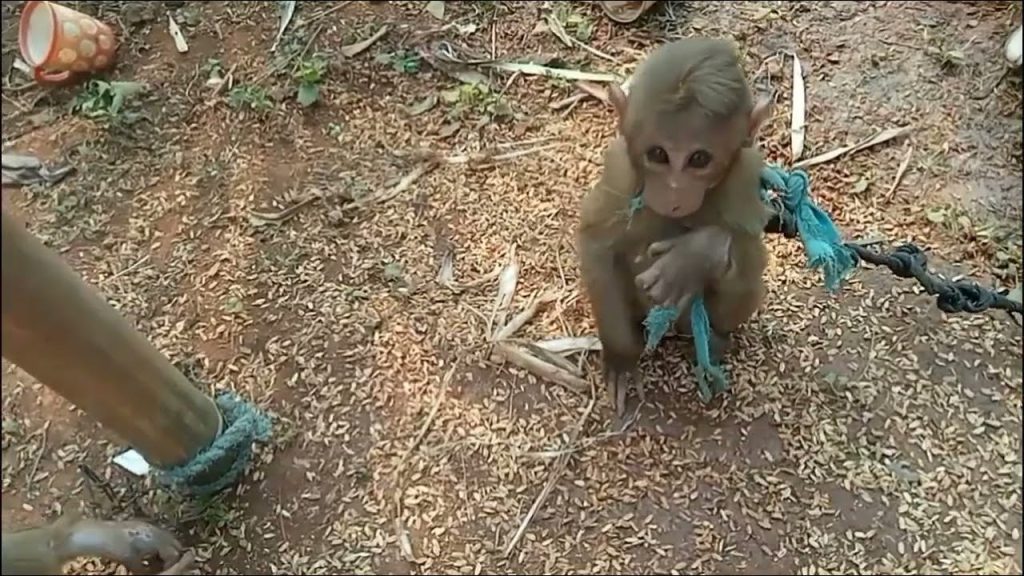
The scene of poor monkeys trapped by a blue rope becomes a quiet emblem of how vulnerability can coexist with resilience in the natural world. When a monkey—especially a young one—finds itself tangled in something it cannot understand, panic often rises first, followed by a desperate search for comfort or help. The blue rope in this imagined moment symbolizes both an obstacle and a test, pushing the monkeys into a situation where instinct, companionship, and human responsibility intersect in complex ways. As they struggle to pull free, their small hands tugging and twisting, the ropes become more than physical restraints; they become reminders of how easily human objects can disrupt wild lives.
A young monkey caught like this usually reacts with confusion before fear takes hold. It may call out, cry, or cling to another monkey nearby, hoping for protection. In social species like macaques or leaf monkeys, these distress sounds immediately draw attention from older group members, who often attempt to groom around the rope, pull at it, or comfort the little one with soft touches and reassuring vocalizations. Yet emotional support cannot replace the practical need for freedom, and when the rope refuses to loosen, the group’s anxiety grows. Their natural intelligence helps them assess danger, but man-made hazards often exceed their ability to solve them alone.
This is where human intervention becomes crucial, though the quality of that intervention matters deeply. A compassionate approach views the monkeys not as entertainment or tools for content creation, but as living beings deserving careful handling, minimal stress, and safe release. A responsible rescuer would approach slowly, avoiding loud noises or abrupt movements that worsen panic. The blue rope must be inspected gently, cut without harming their delicate limbs, and removed in a way that allows the monkeys to pull away naturally without feeling restrained or threatened.
Once free, many monkeys react with a mixture of relief and lingering agitation. Some rush immediately toward the nearest tree or familiar figure, while others pause to shake their hands or inspect the spot where the rope once held them. The moment becomes a subtle lesson about fragility and sanctuary—how quickly danger can appear, and how compassion can dissolve it just as swiftly.
Ultimately, the blue rope becomes a symbol not only of the monkeys’ struggle but of the responsibility humans carry toward wildlife. Every act of rescue is an opportunity to restore balance, protect life, and treat even the smallest creature with dignity.