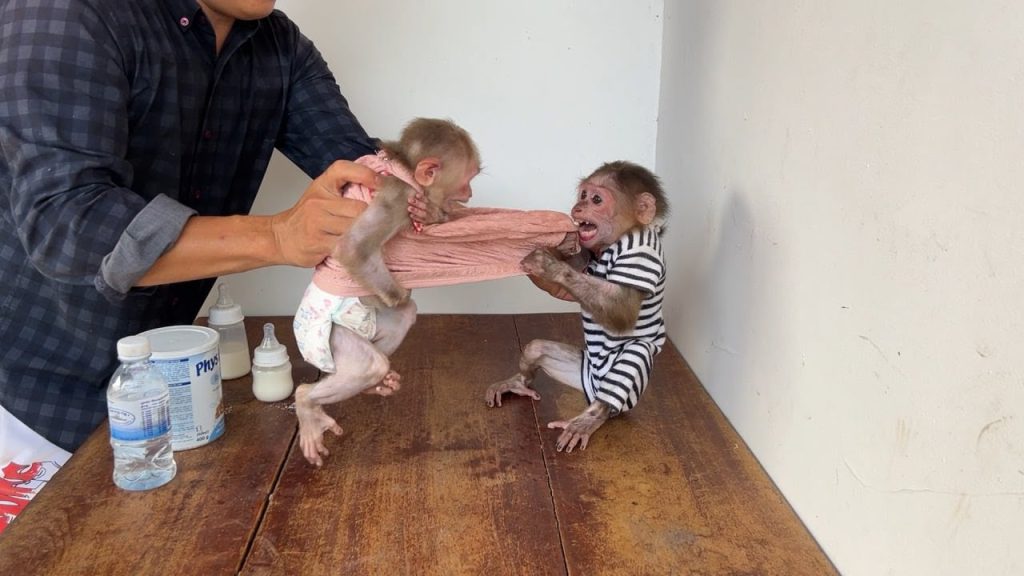
Feeding time is usually meant to be calm and comforting, especially for young monkeys who depend on routine and care. However, when extremely nasty Monica starts fighting Minea while dad is simply trying to make milk formula for them, the moment quickly turns into chaos. This situation highlights the complex emotions, instincts, and social dynamics that young monkeys experience, even at a very early age.
Monica’s aggressive behavior may look shocking or bad, but it often comes from insecurity rather than pure meanness. When food is involved, especially milk, young monkeys can become highly territorial. Milk represents comfort, survival, and attention. Seeing dad focus on preparing the formula may trigger fear in Monica that she will not get her share or will be ignored. That fear can quickly turn into aggression toward Minea, who becomes the nearest target.
Minea, on the other hand, may not fully understand why she is being attacked. She might simply be waiting, curious or hungry, when suddenly she is pulled into a fight. This can create confusion and stress, making the situation worse. When one monkey reacts with fear, the other may react with even more aggression, forming a cycle that is hard to break in the moment.
Dad’s role in this scene is especially important. Trying to make milk formula while managing fighting monkeys is not easy. Staying calm is critical, because monkeys are extremely sensitive to human emotions. If dad becomes angry or panicked, the tension can escalate further. Gentle but firm separation, reassuring voices, and clear attention to both monkeys help reduce jealousy and competition.
It is also important to understand that such behavior is often a phase. Young monkeys are still learning boundaries, sharing, and patience. Fighting during feeding times can be a sign that they need more structure. Feeding them separately, distracting one while preparing the milk, or offering comfort before the formula is ready can help reduce conflict. Over time, with consistent routines, these aggressive moments often decrease.
This situation also shows how similar young monkeys are to human children. Hunger, impatience, and the need for attention can quickly lead to tantrums and fights. It does not mean the monkey is bad; it means she is still learning how to handle her emotions.
While Monica’s behavior may seem extremely nasty in the moment, it is also an opportunity for teaching calmness and security. With patience, understanding, and consistent care, feeding time can slowly return to being peaceful. In the end, moments like these remind us that caring for young lives requires not only food, but emotional guidance, fairness, and a lot of patience.